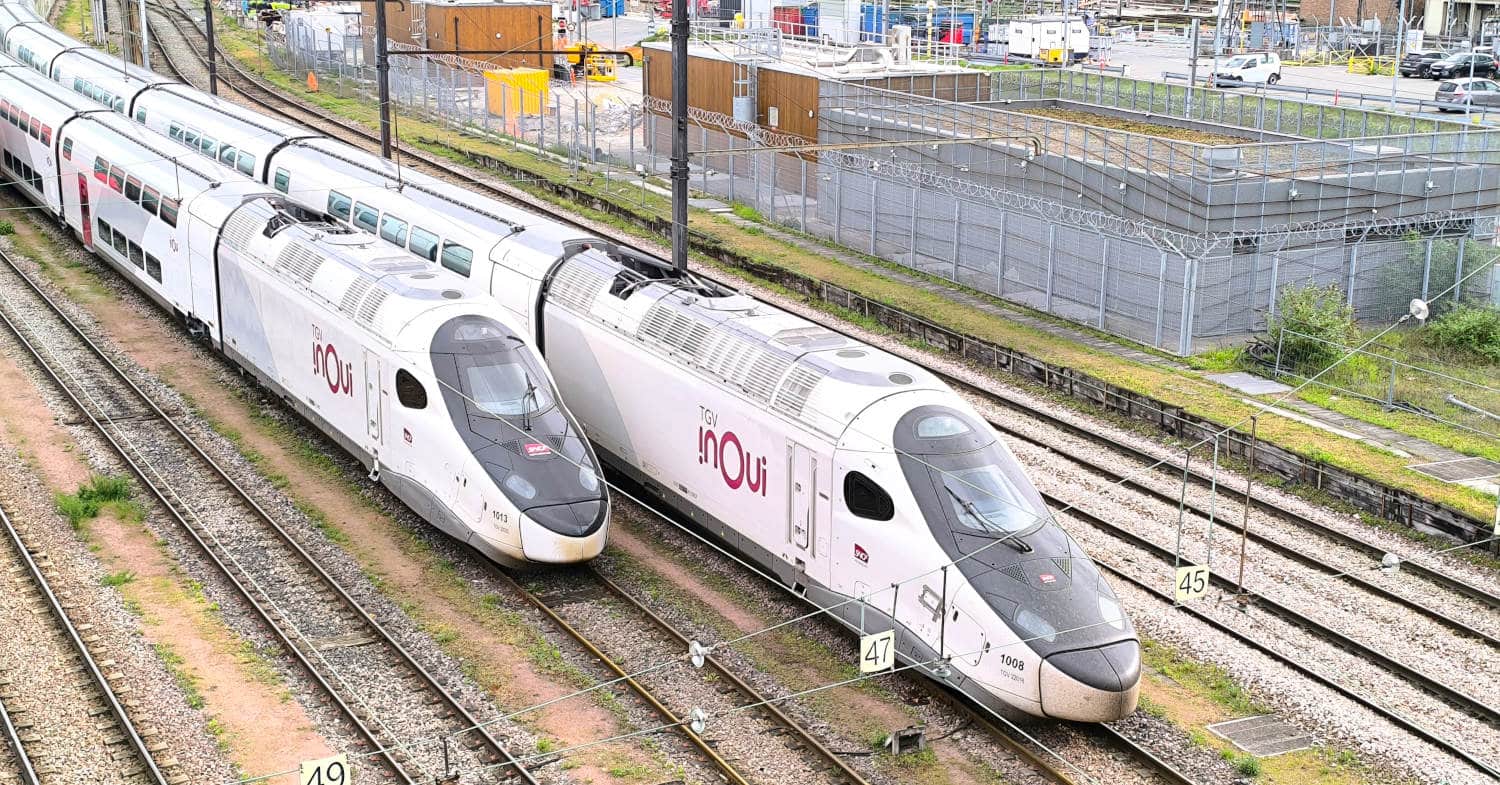
The TGV M, Alstom’s latest generation of high-speed trains, now has an official entry-into-service date. It will begin carrying passengers between Paris and Marseille on 6 November 2026 in TGV Inoui service, with the first departure scheduled from Gare de Lyon at 09:56. Seats can already be booked.
The units, ordered in 2018, were originally due to begin deliveries from late 2023. Entry into service was initially planned before the Paris 2024 Olympic Games, then postponed to 2025. It was subsequently pushed to early 2026 amid tensions between manufacturer and operator, and later to July. On 11 September, SNCF and Alstom set the date as “autumn 2026” following commercial simulations.

The TGV M was developed jointly by the operator and manufacturer and gave rise to Alstom’s Avelia Horizon family. In addition to SNCF, it has been ordered by its future competitor Proxima and by international travel subsidiary Eurostar. The French manufacturer is seeking to have CP select this new generation of trains, in competition with Talgo.
Each unit can accommodate up to 740 passengers in its maximum-density configuration (for Ouigo). Thanks to the new compact power cars, passenger space increases by 20%. Alstom says it consumes 20% less energy, emits 32% less CO₂ and cuts maintenance by 30%. It is 97% recyclable at end of life.