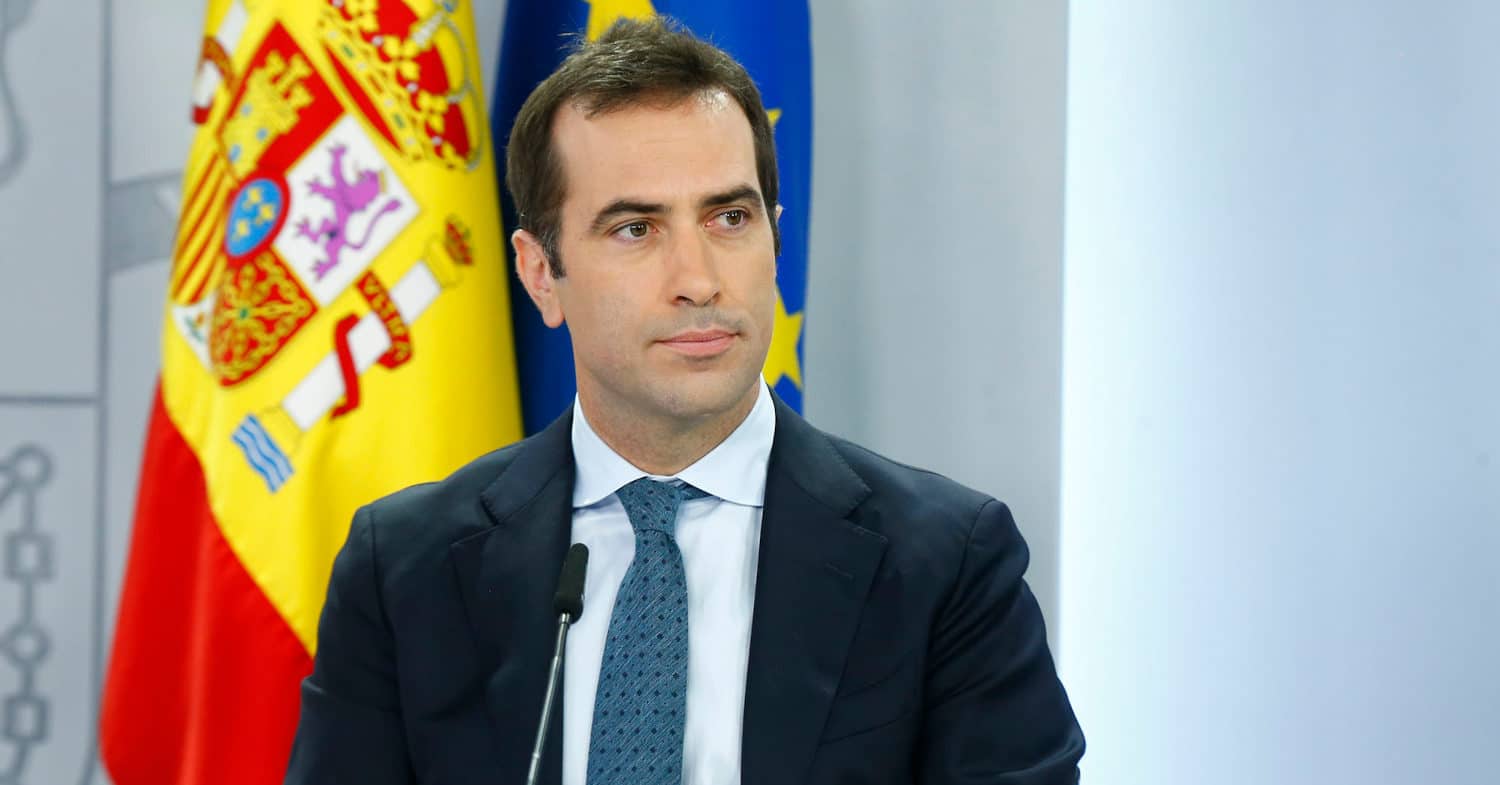
First Deputy Prime Minister and acting Transport Minister Carlos Cuerpo announced this morning that the railway expert committee he flagged last Friday will be constituted today. Through the committee, Cuerpo aims to strengthen system safety, restore performance and service quality, and rebuild confidence in the railway following the Adamuz and Urda accidents.
The committee will include engineers from foreign railway administrations, as well as specialists from outside the sector, such as aviation. Speaking on the programme Herrera en la Cope, he said these professionals will “validate” the work of Adif’s engineers.

Action plan and audit
The group will have two tasks. The first is to draw up, over the coming weeks, an emergency action plan providing “an additional layer of safety” and advancing the recovery of service quality. The second is a full audit of the system within two to three months. The government hopes the audit will be the “seed” of a state pact in the next legislature and will improve the system, regardless of who is in power.
Cuerpo, who is also economy minister, said he has “ring-fenced” €19bn for maintenance and investment over the next five years, which he said is the amount the experts demand. He denied that the rollover of the 2023 budget has prevented planned investment, and noted that Adif has executed more than €5bn in EU funds.
Strike and new decree
The sector faces a broader strike on Tuesday than last week’s. Semaf has called drivers at Renfe, Iryo and Ouigo to strike. In addition, Adif’s works council has called all of its staff out, and onboard crews are also called, with CGT as the majority union. The drivers’ strike planned for 12 November has been postponed to 23 November, pending Congress’s ratification of the royal decree-law approved last week on Wednesday.
The Council of Ministers will also approve a decree limiting working time for traffic controllers, a long-standing union demand. According to union sources, continuous control duty may not exceed two consecutive hours and must be followed by a break of at least 30 minutes.
The State Railway Safety Agency (AESF) has also issued two technical recommendations:
The first sets out double verification, with prior endorsement and supervision by the Traffic Regulation Centres, for critical operations in degraded mode. This applies, for example, when the main signalling system, such as LZB or ERTMS, fails, as on the day of the Urda accident.
The second asks Renfe, Iryo and Ouigo to set a minimum crew complement and provide emergency training. It also urges Adif to inform operators about line sections that could affect safety and to train for evacuations.