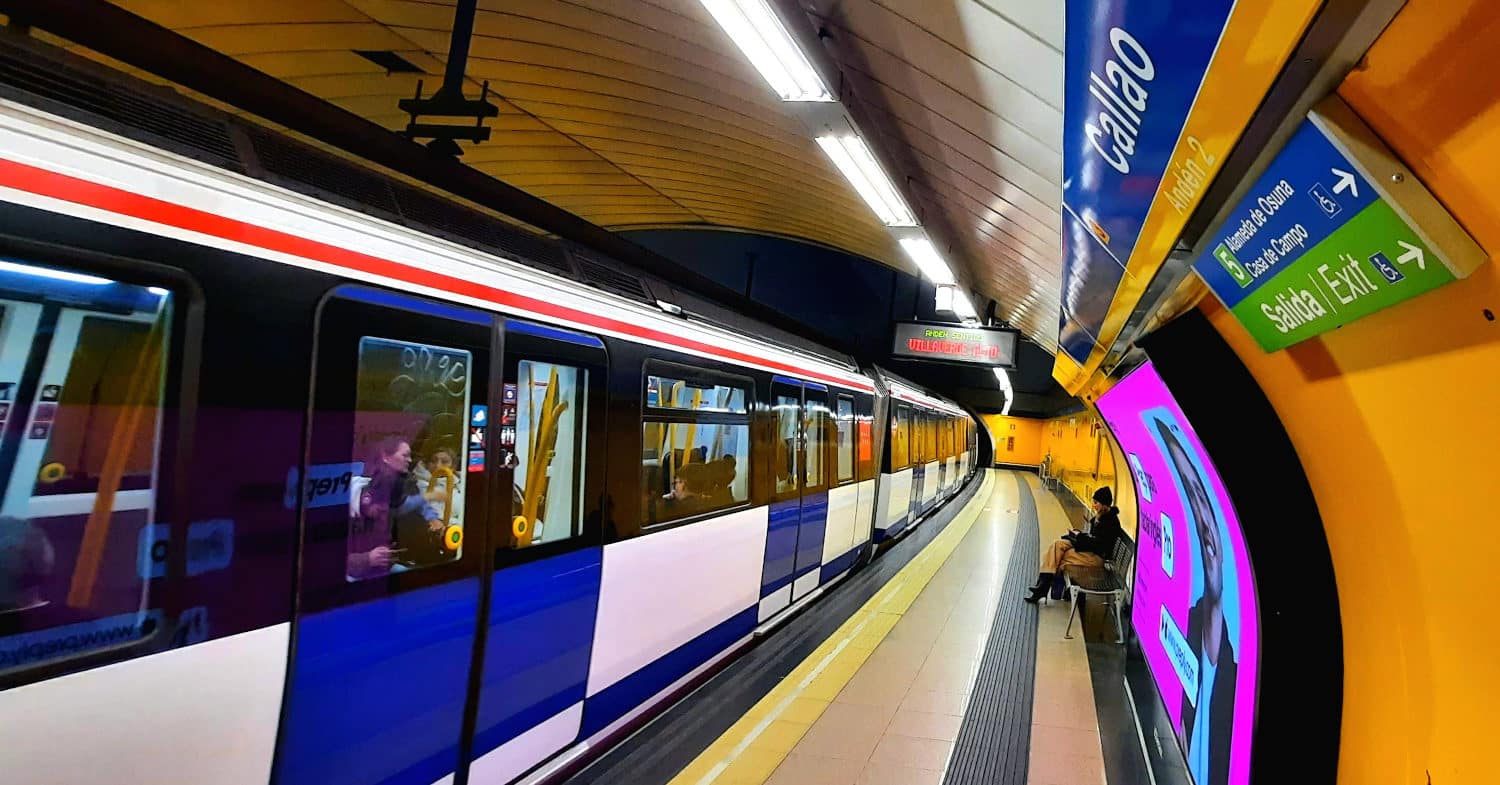
In an open letter published on 13 November, the Metro de Madrid works council warned that the network could suffer a serious accident unless its management model changes. In Notice No. 27, CCOO, UGT, Solidaridad Obrera, Sindicato Libre and the technicians’ union (STMM) call for “radical changes”. Their aim is to prevent Metro from having to mourn a tragedy similar to those that have occurred over the past year on the RFIG (Red Ferroviaria de Interés General, Spain’s national general-interest rail network).
Accidents cited by the council
The document recalls three fatal rail accidents:

- Adamuz, on 18 January, with 46 fatalities.
- Barcelona, on 20 January, with one fatality.
- Urda, on 28 October, with 69 deaths to date.
According to the council, these were neither bad luck nor a coincidence of timing, and they were not caused by errors by staff at the bottom of the chain of command. It attributes them to a model that puts corporate profits ahead of public service and lacks staffing plans matched to workforce needs. It links that model to the sector’s occupational accident rate and recalls the death of a worker in July at Renfe’s Integral Maintenance Base in Villaverde.
What Metro staff are denouncing
The council argues that the company is part of that model and lists the following shortcomings:
- Reduced budgets for maintaining and repairing trains and fixed installations.
- Less training time for both frontline staff and middle managers.
- No assessment of training quality. The letter criticises the requirement to deliver practical instruction to people who do not feel sufficiently trained.
- No refresher training on emergencies or drills, despite requests from staff.
- Minimal and still inadequate improvements to the protocol for person-struck-by-train incidents.
- An energy-emergency protocol that took more than a year to arrive after the April 2025 blackout. According to the council, it provided only about 30 satellite phones, with no training or drills.
- Failure to comply with the diesel-fume protocol when engineering trolleys (dresinas) enter depots.
- Stressful conditions in the Central Control Room (Puesto Central). Shift changes are made with less than 24 hours’ notice, and understaffed teams cover two control desks at once. Staff are under pressure from variable pay and penalties for mistakes.
- Refusal to improve conditions for grades that have been below the required staffing ratio for months or years: power-dispatch (Despacho de cargas) operators, sector supervisors, auxiliary traffic technicians, depot supervisors and Control Centre (Puesto de Mando) inspectors.
- Subcontracting of train, track and signalling maintenance, as well as cleaning. According to the council, this cuts costs and avoids accountability under company protocols and to health and safety representatives.
Public service and staffing
The letter stresses that Metro is a public company, directly answerable to the Community of Madrid, providing an essential service. The council says it is “fed up” with management focused on tourism and one-off events, such as the Pope’s visit, a major sporting event or a singer’s concerts. It calls for priority to be given to day-to-day service: trains that do not break down, adequate climate control, sufficient frequencies across the whole network, and clean stations staffed by personnel.
It also notes that the company has recruited almost 50% more track-maintenance (Servicio de Vías) technicians in recent months, immediately after the Adamuz accident. In the council’s view, this shows that Metro is aware of its staffing shortfalls and is covering them by “applying patches” rather than planning ahead. It maintains that the human factor works only if staff are not operating under pressure, on impossible shift patterns, with constant uncertainty, minimal training or poorly maintained facilities.