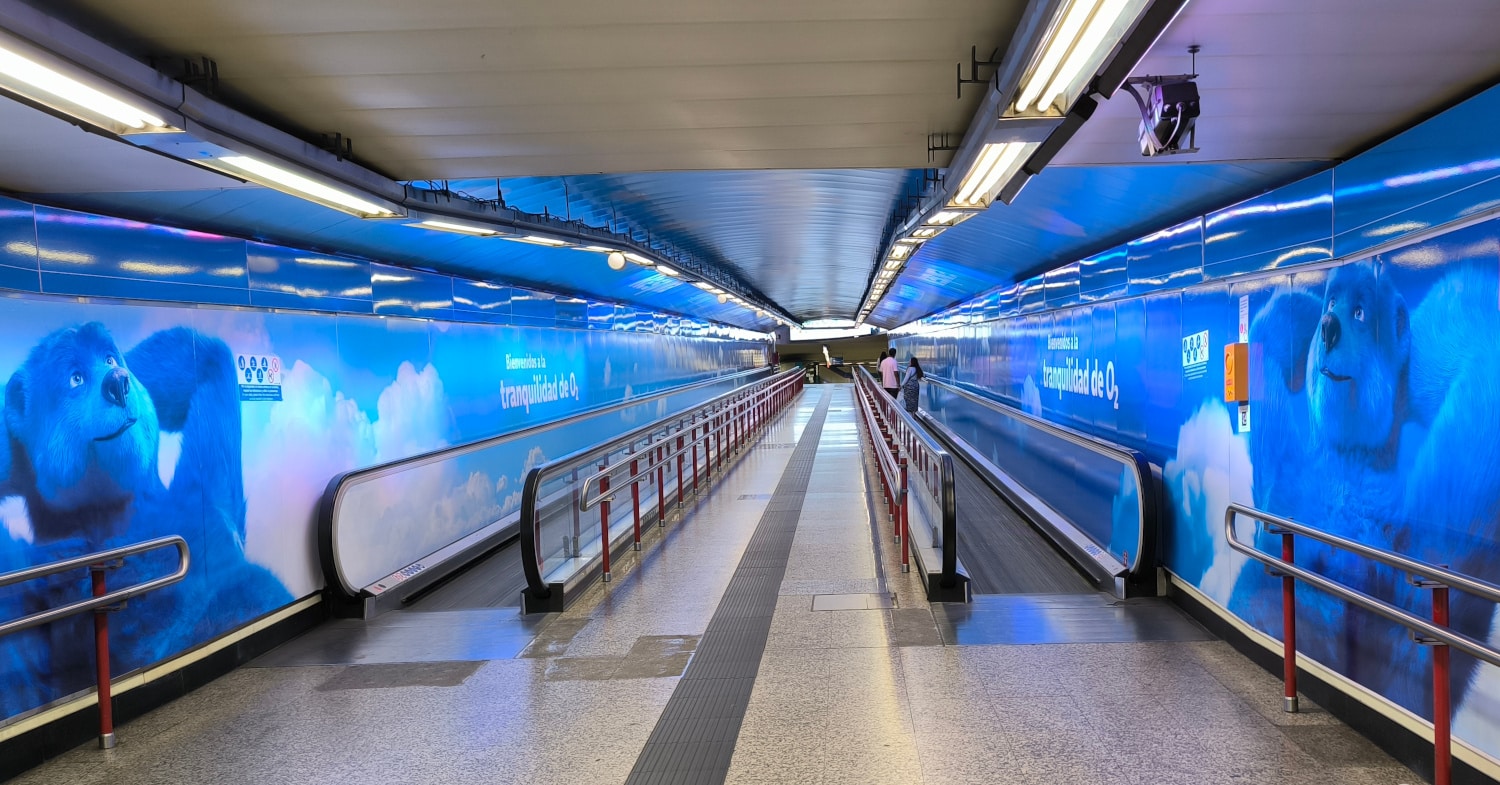
Movistar and O2 customers can already connect to 5G+ at 18 Madrid Metro stations. Telefónica expects to reach 24 stations before the end of the year and 30 during the first quarter of 2027.
The rollout is being carried out over the infrastructure of Metrocall, the neutral host in which Cellnex holds a 60% stake and Metro de Madrid the remaining 40%. The company manages the metro’s commercial mobile networks and enables several operators to share the same infrastructure. MasOrange already offers 5G on the Metro for Orange, Yoigo, Pepephone, MASMOVIL, Jazztel and Simyo, while Telefónica is leading the deployment of high-performance 5G+.

The first phase has prioritised the busiest stations. These include Sol, Nuevos Ministerios, Plaza de Castilla, Atocha, Príncipe Pío and Méndez Álvaro. Chamartín, Avenida de América, Diego de León, Gran Vía, Tribunal, and Alonso Martínez will be added in the coming weeks.
The depth of the stations and tunnels makes it difficult for signals from surface-mounted antennas to reach the underground network. For this reason, a distributed antenna system (DAS) is used, distributing the signal from a shared infrastructure. This provides more uniform coverage and supports many simultaneous users. As a neutral host, Metrocall can share its infrastructure among operators.
Alfonso Álvarez, CEO of Cellnex Iberia, highlighted the role of shared infrastructure. Sergio Sánchez, CTIO Spain director at Telefónica, emphasised the opportunity to bring next-generation network capabilities to one of the most demanding environments.