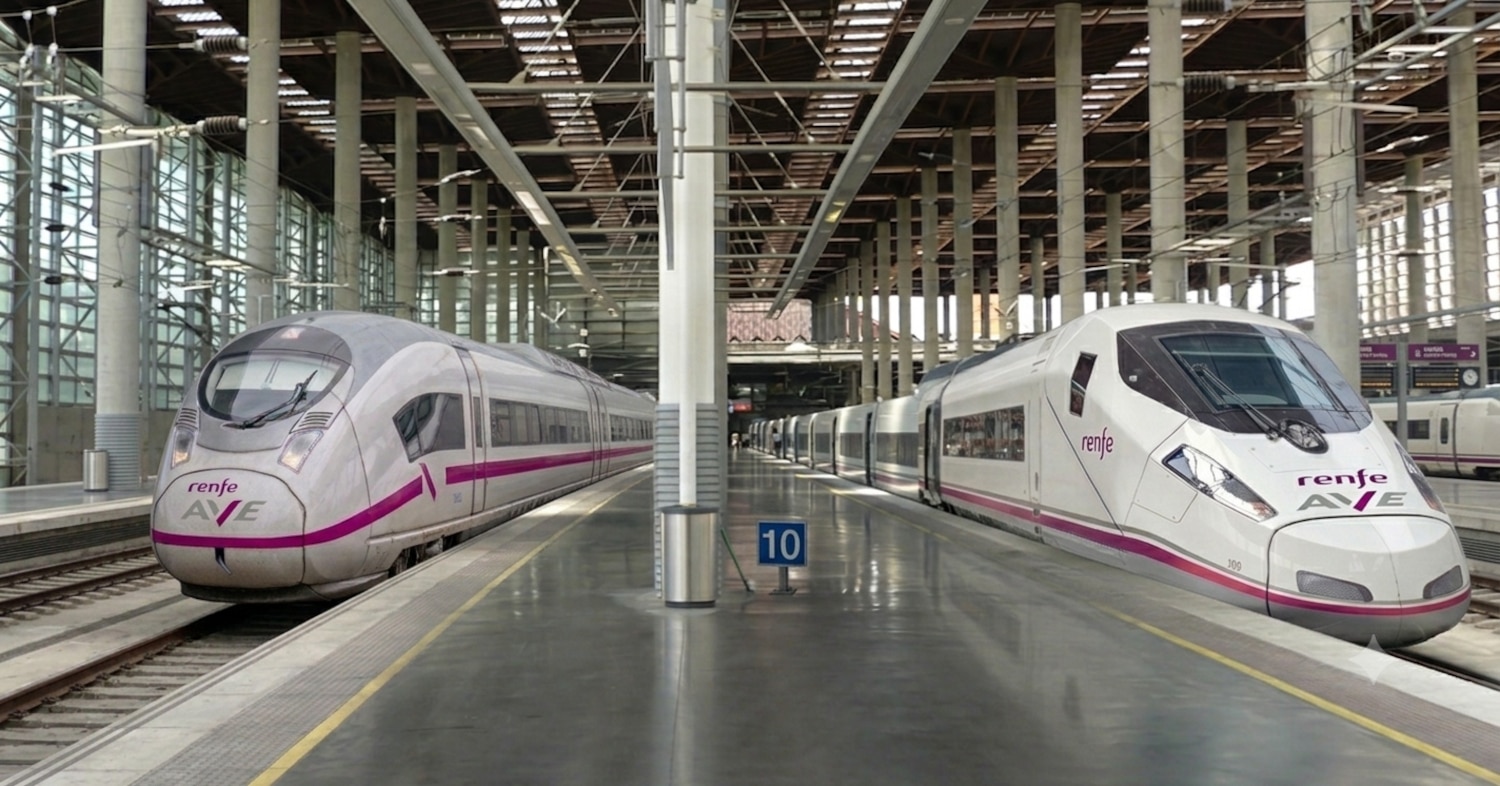
The Congress of Deputies’ Transport Committee has approved a non-binding motion urging the Government to reframe—and potentially suspend—Renfe’s high-speed train procurement. The initiative, tabled by the Popular Party (PP), challenges technical specifications that, according to its sponsors, have excluded Talgo, CAF and other manufacturers with industrial capacity in Spain, such as Alstom, from the final evaluation stage.
The tender covers an initial order of 30 high-speed trainsets, with an option for a further 10 units. The initial order is valued at €1,362 million, while the estimated total contract value exceeds €4,145 million.

The non-binding motion passed with support from the PP, Vox and Esquerra Republicana. The PSOE and Sumar voted against, while Junts and the BNG abstained, according to Europa Press. The PNV and EH Bildu did not take part in the sitting. As a non-legislative proposal, the agreement has no direct legal effect on the procurement procedure, but it makes Congress’s position clear.
Questioned requirements
The PP accuses Transport Minister Óscar Puente of drafting specifications that favour Hitachi Rail. Among the contested elements are the requirement for trainsets to be designed for a commercial speed of 350 km/h and a car-body width of 1,080 mm.
The combination of these requirements, together with homologation conditions and delivery deadlines, has reduced the number of manufacturers able to bid. Talgo did not progress to the evaluation phase after submitting its offer outside the stipulated deadline, while the two proposals under consideration correspond to Hitachi Rail and Siemens Mobility.
PP MP Héctor Palencia argued that the specification “closes the door on Spanish companies” and warned of the consequences for industry and employment. The PP also considers that the 350 km/h requirement is not sufficiently justified by the current state of the railway infrastructure. However, it should be noted that the trains will take time to be delivered, must have a service life of at least 30 years, and work is underway to adapt the Madrid–Barcelona high-speed line to allow operation at this speed.
Accordingly, the approved text urges the Government to reframe the technical requirements, homologation conditions and delivery deadlines to favour the effective participation of manufacturers with industrial capacity in Spain, within the framework of national and EU law. It also calls for clarity on when the infrastructure will be ready, on which corridors that speed can be exploited, and how many trainsets will actually run at 350 km/h.
Renfe needs more trains
The deadline for submitting bids closed on 23 June, and the procedure is currently in the evaluation phase following the opening of the financial offers this September. Renfe needs to expand its rolling-stock fleet to respond to growing demand and to compete with Ouigo and Iryo in high-speed services, as well as to offset reliability issues with the Class 106 and its lack of homologation in France.
The operator has also sought to limit risks associated with delays in train manufacturing and delivery. The specification sets as a priority condition that the first five units be delivered in under 40 months, given the need to improve capacity.
Designing the trainsets to achieve 350 km/h in commercial service will allow operation at that speed as infrastructure upgrades, including aerodynamic sleepers, come on stream. The company maintains that this maximum speed will reduce journey times and strengthen the operator’s position in the long-distance rail market.
Although Renfe already has 26 trainsets homologated for 350 km/h operation—the Class 103—these are insufficient for all radial and cross-country services on the Madrid–Barcelona high-speed line, and it is currently necessary to use Class 100 (for AVE Madrid–Marseille), Class 102 and Class 112 trainsets with lower top speeds.
At present, neither CAF nor Talgo has in its catalogue a train designed for this speed, making it unfeasible to meet the deadlines. By contrast, both Hitachi and Siemens do; these are in production and already homologated.