On 28 October, the anniversary of the opening of the Barcelona–Mataró railway, Renfe chose to launch its new website and begin rolling out its new ticketing system. However, the tragedy in Urda completely overshadowed an improvement that affects not only the purchasing process but also simplifies the use of Renfe trains by reducing the number of brands.
From 25 January 2027, when the transition ends, the Alvia, Euromed (partly), Proximidad, Regional Exprés and Media Distancia brands will disappear.

Long-distance: four brands
In long-distance services, the offer will be limited to the AVE, AVE Euromed, Avlo and Intercity brands. Services previously sold as Alvia, which combine high-speed and conventional-network sections with variable-gauge trains, will be marketed as Intercity, with Básico, Elige and Elige Confort fares, although the latter fare will not be available on Class 121 trains, as they lack first-class seating.
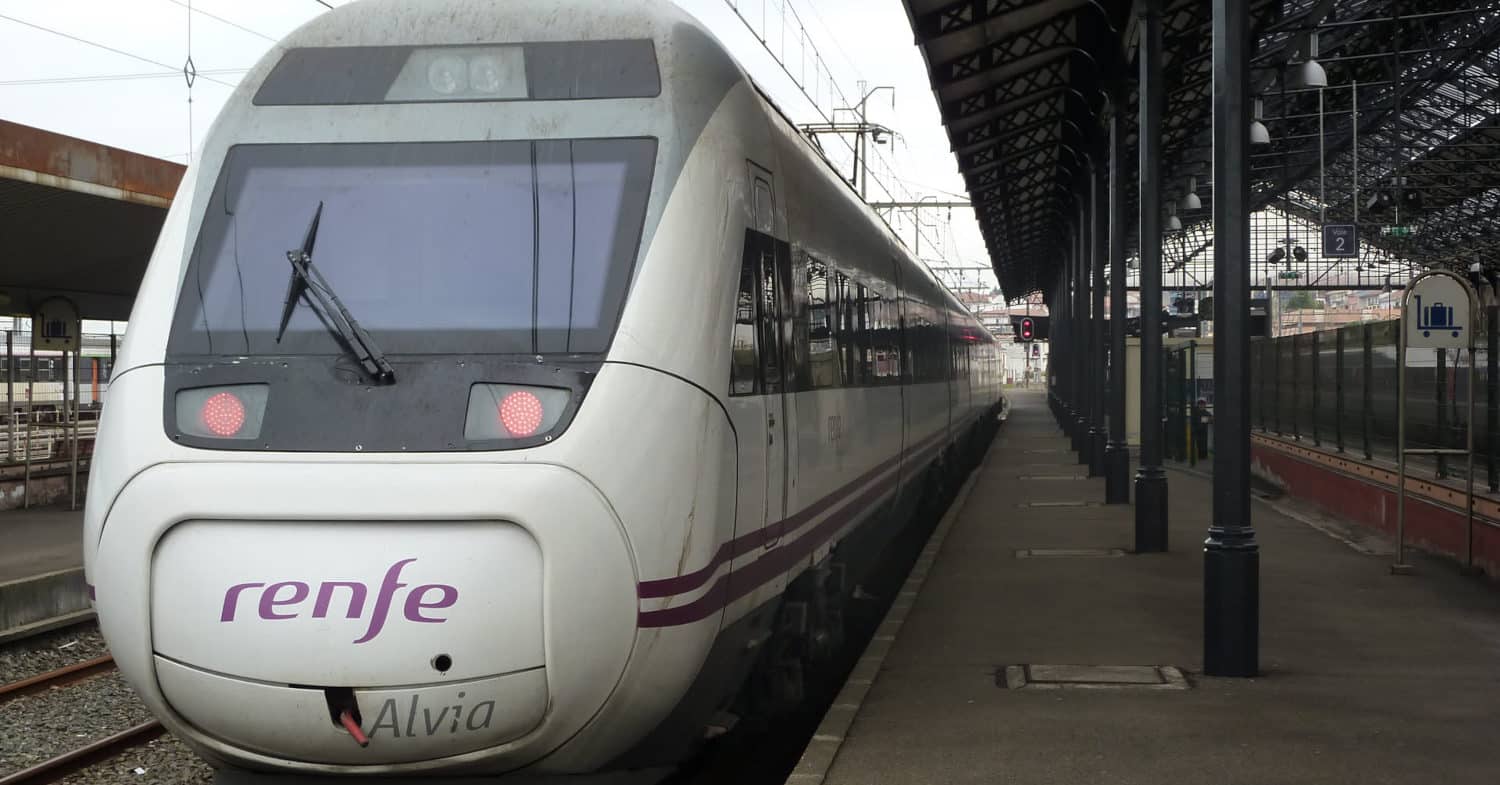
The disappearance of the Alvia brand was an open secret. Renfe has progressively removed the name from all the trains that carried it. Moreover, the arrival of the Class 106 with AVE services on conventional-gauge lines no longer marked a difference from this service.
Euromed, the only conventional-network train with Premium tickets, is being integrated into the AVE brand. This is a commercially logical change, as it offers the same facilities, although it is operated with Class 130 trains, with a maximum speed of 250 km/h.
One brand for regional trains
The broadest cut applies to services subject to public service obligations (PSOs). Regional, Proximidad, Regional Exprés and Media Distancia, which operate on conventional lines, will be grouped under the Regionales brand, as reported by ElEconomista.es, although no tickets are yet on sale from 25 January. Alongside this brand, Cercanías and Avant remain the only other names in the PSO catalogue.
Reservation conditions will no longer depend on the product name, but on the train configuration and fare, information that passengers cannot see. Cercanías will continue to have no seat reservation, while Avant will retain it. Regionales will begin to remove it shortly on some routes.
No reservations from 12 December
On 22 October, Renfe announced that, from 12 December, you can travel without a numbered seat on several Media Distancia and Regionales routes. The affected routes are:
- Galicia: A Coruña–Vigo Guixar, with services originating or terminating in Santiago and Vilagarcía, and A Coruña–Ferrol.
- Valencian Community and Region of Murcia: Valencia–Alicante–Murcia–Cartagena.
- Extremadura: Cáceres–Valencia de Alcántara, Badajoz–Villanueva de la Serena and Mérida–Zafra.
- Aragón, Castilla y León, Navarra and the Basque Country: Burgos–Vitoria–Pamplona–Zaragoza, Valencia–Teruel–Zaragoza and Salamanca–Valladolid–Palencia.
The measure comes with additional benefits. The surcharge for carrying complete bicycles, without dismantling them, disappears. The surcharge for pets up to 10 kg in a carrier and for dogs up to 40 kg is also abolished. On T1 fares, aimed at routes with more stops and longer journey times, the removal for pets already applies, and it will be extended to the rest in the coming weeks.
One system for seven channels
This reorganisation of brands is part of the user-experience improvement that Renfe wants to offer with its new sales system. It is not merely a facelift or a simple evolution of the user interface.
As the operator announced during the system’s presentation, the entire IT system behind sales is changing. Sqills, a company specialising in ticketing systems that Siemens Mobility acquired in 2021, developed the new platform. Accenture is also an integration partner.
The new system cost €164 million and will unify, at the IT level, all sales channels: website, app, ticket offices, self-service machines, travel agencies, telephone sales, and on-board intervention. The system is also more agile and powerful than the current one and is designed to prevent queues during peak traffic.