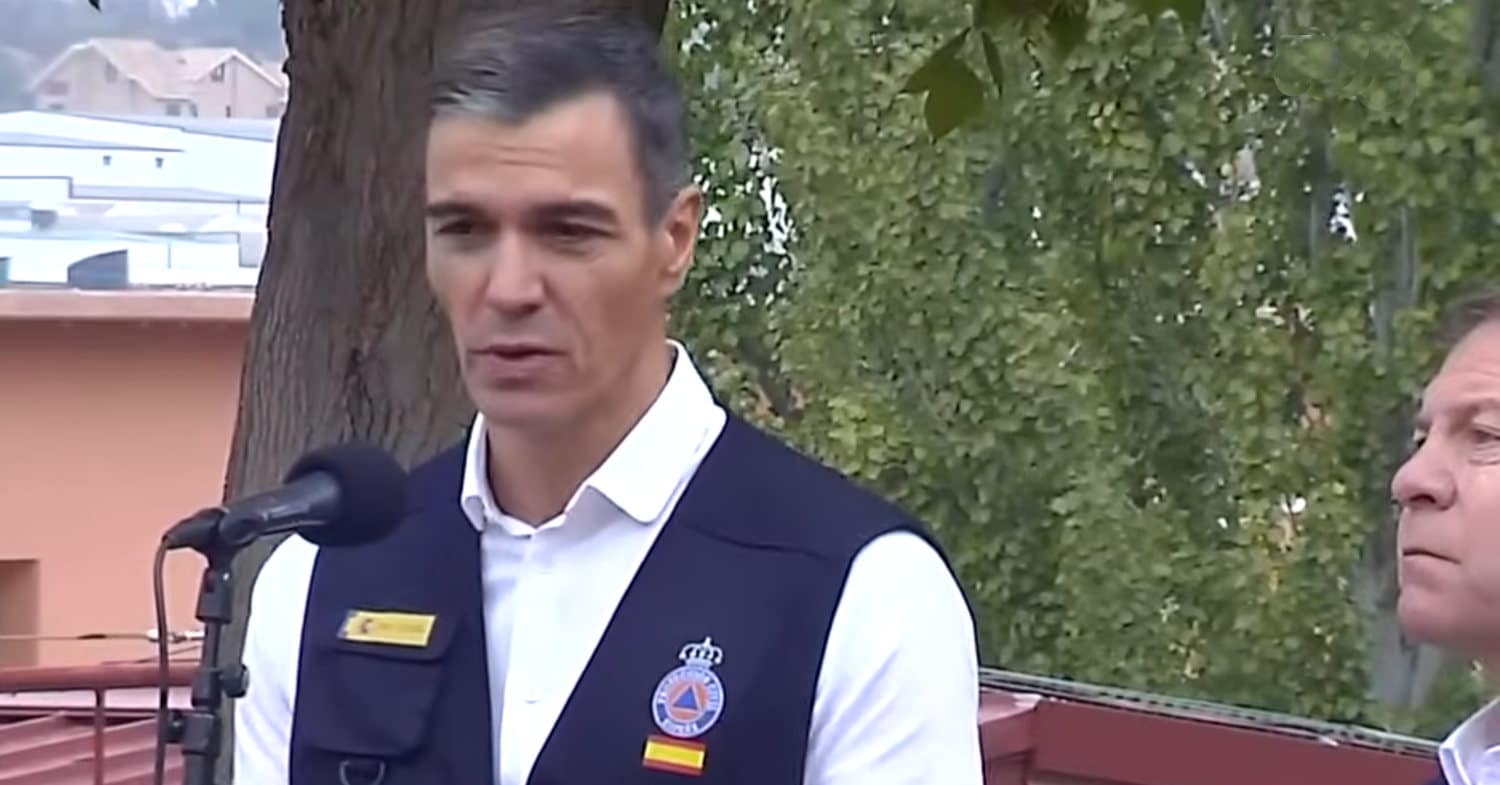
peaking to the media for a second time this morning in connection with the Toledo rail accident, prime minister Pedro Sánchez appeared alongside Castilla-La Mancha president Emiliano García-Page and the regional minister following a meeting of the CECOPI emergency coordination centre. He said that the entire General State Administration was mobilised in the response to the accident.
Sánchez began by thanking the media for their reporting, particularly in support of the victims’ families. He divided the state’s response into three strands: the emergency response, including recovery of bodies, identification of the dead, registration of the injured and provision of medical care; establishing the cause of the accident; and, at a later stage, material compensation for the families.

Emergency response
The prime minister stressed that the State General Civil Protection Emergency Plan had been activated from the outset. Personnel from the UME military emergency unit, the Guardia Civil, the National Police and the civil protection system were mobilised under the coordination of the regional government of Castilla-La Mancha. Sánchez praised the coordination and professionalism of public servants across all administrations involved.
Support for families
He highlighted that Renfe had activated its assistance plan for victims of rail accidents and their families, opening an information telephone line and assistance centres at several stations on the Madrid–Seville line.
He added that private operator Iryo and infrastructure manager Adif had also opened assistance points for relatives and people seeking information on the status of the accident.
The prime minister also acknowledged the work of psychological support services, citing public employees who had been at the scene overnight and the previous day, as well as the Red Cross and the 112 emergency service.
Cause and safety
Sánchez said institutions, “from the smallest municipality to the Government of Spain”, were working day and night. Their objective was not only to support the families, but also to establish “every last detail” of what happened and strengthen safety to prevent a recurrence. He did not offer any hypotheses as to the cause of the accident.