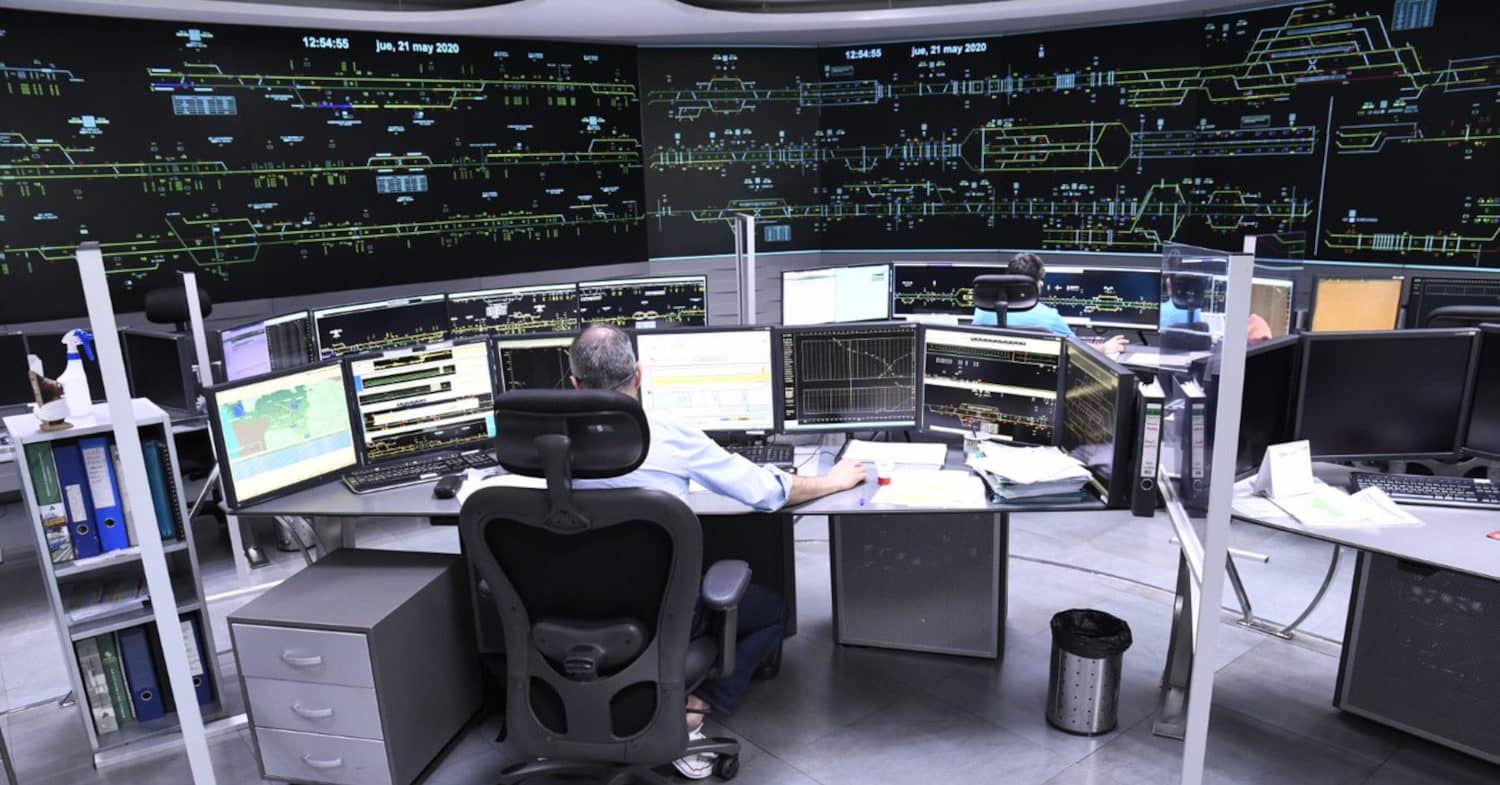
The audio recordings from the Urda accident, which left at least 68 dead after a Renfe train ran into an Iryo service on the Madrid–Andalusia line, have enabled a reconstruction of events at Adif’s Traffic Regulation and Control Centre (CRC).
However, the conversations leave open the question of whether responsibility can be attributed solely to the traffic controller without assessing the context in which they were operating.

According to ElEconomista.es, the rail traffic control workforce is calling for the investigation to take account of organisational and technical conditions. According to their representatives, in degraded operating situations they are working beyond their capacity, with staff shortages, rising traffic, increasing incidents and technical faults that are not always supported by auxiliary staff.
Earlier demands
The Railway Traffic Union (SCF) had already called demonstrations outside Adif on 6 and 14 October to demand that vacancies be filled, breaks be respected and staffing levels be increased by an additional 15% to 20%. It also calls for the application of a just safety culture, which assesses individual error alongside technical and organisational circumstances.
Before the erroneous instruction that authorised the Renfe train to resume movement, the LZB system had failed; it is due to be replaced by ERTMS, whose deployment is at least nine months behind schedule.
Adif recruited 203 new traffic controllers on 5 October, who must complete six months of training and practical experience before joining the workforce, expected in May 2027.