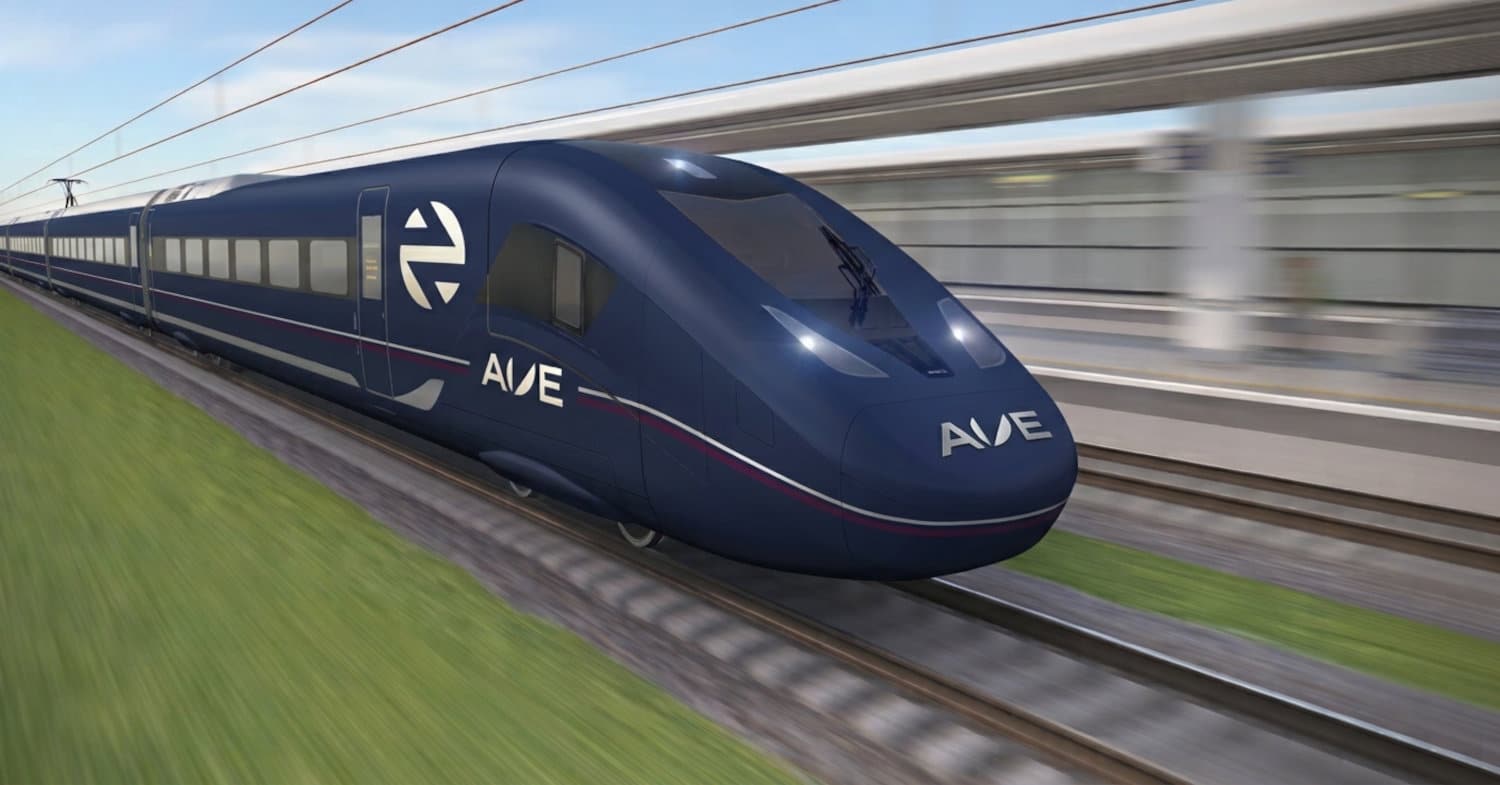
Renfe has awarded Siemens the contract to add 30 Velaro Novo high-speed trainsets to its fleet, with an option for a further 10 units. The award is worth €1,218m and includes the items required for maintenance. If the option is exercised, the investment could rise to €1,777m.
Although the industry had assumed Hitachi Rail would win the tender, Siemens ultimately prevailed over the Italo-Japanese manufacturer with a train that has yet to progress beyond the design phase, and of which only one car is currently undergoing homologation in Germany.

The Velaro Novo, designed for 350 km/h running, is a technological evolution of the Velaro MS and, therefore, of the Velaro E, Renfe’s Class 103.
A train yet to enter commercial service
On the market, the standard model currently has just one customer: VinSpeed in Vietnam. Its turnkey contract, worth up to €1bn, covers 10 Velaro Novo sets for the Hanoi–Quang Ninh and Ben Thanh–Can Gio lines. Siemens has also sold Brightline West 10 American Pioneer 220 trainsets, a US version of the Velaro Novo adapted to that market. These are seven-car trains with capacity for up to 450 passengers, and they will be built at Horseheads, New York.
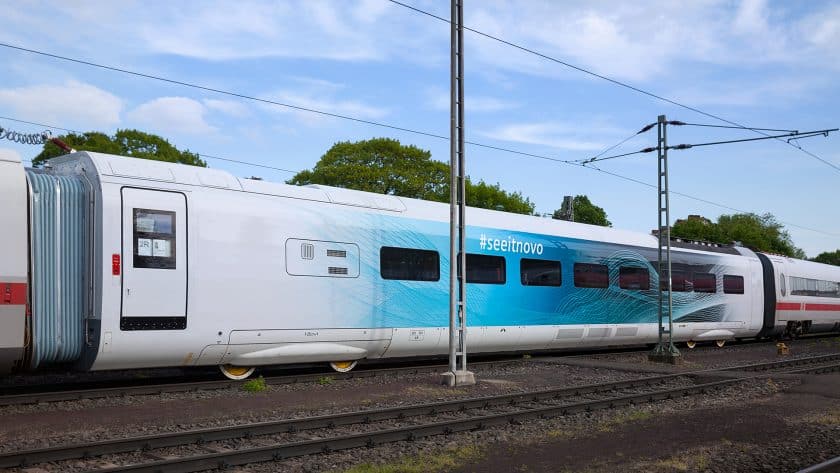
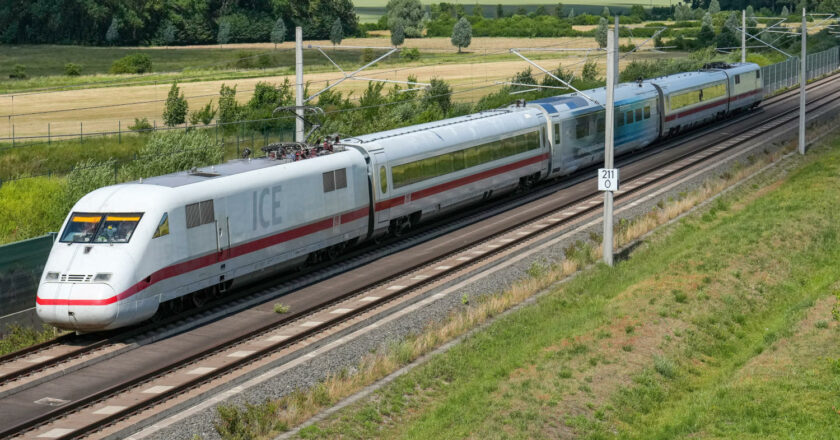
The Velaro Novo has not yet entered commercial service. Only one prototype car exists, running coupled to Deutsche Bahn’s ICE S for homologation purposes since April 2018. In July 2025 it was announced that the train had reached 405 km/h, which qualifies it for a maximum commercial speed of 350 km/h.
Formation and comfort
Each train will have seven cars and 520 seats on a single deck, outdoing the Talgo Avril without resorting to 3+2 rows that compromise comfort. There will be 404 seats in Standard class (78%) in a 2+2 layout; this is the total number of seats the Class 103 offers across its two classes. In Comfort, the train will have 116 seats in Preferente (22%), in a 2+1 layout. The seats will be able to pivot to face the direction of travel, and each will have a power socket and USB port.
Lower weight, distributed traction and more compact technical equipment, compared with Renfe’s current fleet, allow more seats to be added without lengthening the formation.
The new trains, expected to be designated Class 110, will also have larger multipurpose areas for luggage, bicycles and passengers with reduced mobility. Siemens puts the Velaro Novo’s weight reduction at more than 70 tonnes, 15% less than previous generations.
The new bogies, reduced weight and aerodynamics are aimed at a quieter ride with less vibration and greater stability. The aerodynamics also reduce pressure waves in tunnels and noise when two trains pass. The digital architecture supports higher-capacity Wi-Fi and updates throughout the train’s service life, and improves passenger entertainment and information.
Delivery schedule
The first five units must arrive within 40 months. The remainder will be delivered at a uniform rate until the order is completed in 62 months. Renfe cannot afford further manufacturer delays like those suffered on recent acquisitions.
The tender, issued in April, assessed the manufacturer’s capacity and financial standing to meet deadlines and to deliver a train suitable for 350 km/h. The financial bid carried a weighting of only 30% in selecting the successful bidder. The technical bid assessed by formula carried a weighting of 49%, while the technical criterion assessed by value judgement accounted for 21%.
Reliability and energy consumption
Fleet availability is one of the main objectives. The train has fewer components, more monitoring, advanced predictive maintenance and remote diagnostics, to reduce failures, cancellations and delays. Maintenance will be flexible, with demanding availability and reliability commitments.
The last-mile system incorporates high-capacity batteries that can power the traction equipment. This allows the train to move under its own power after an incident, without immediately depending on rescue locomotives. The lightweight design, lower running resistance and latest-generation traction reduce energy consumption, CO₂ emissions and operating costs.