Four days have passed since the rail accident at Urda and, unusually for such a short period, we already know much of the chain of events. The judicial investigation and that of the AITAT (Independent Administrative Authority for the Technical Investigation of Railway Accidents and Incidents) are still to come. But with the first report and the statements by minister Óscar Puente, the picture is clearer than in other, more complex accidents.
At Railin we defend the railway, and for that reason we cannot simply repeat the official version. There are things that are inexplicable which are neither the Traffic Controller’s order nor the LZB failure. There is a background stretching back to 2008 and public demands dating from 2017 which, had they been addressed, would probably have prevented this tragedy.

The facts
To summarise objectively:
- The LZB failed over a 69 km section. Here we explain how this system works.
- Operation switched to BSL (Lateral Signalling Block): only one train may occupy each physical block section, the stretch delimited by signals. No train may enter the next section until the preceding train has left it and the signal has cleared to green. ASFA monitors compliance with this rule.
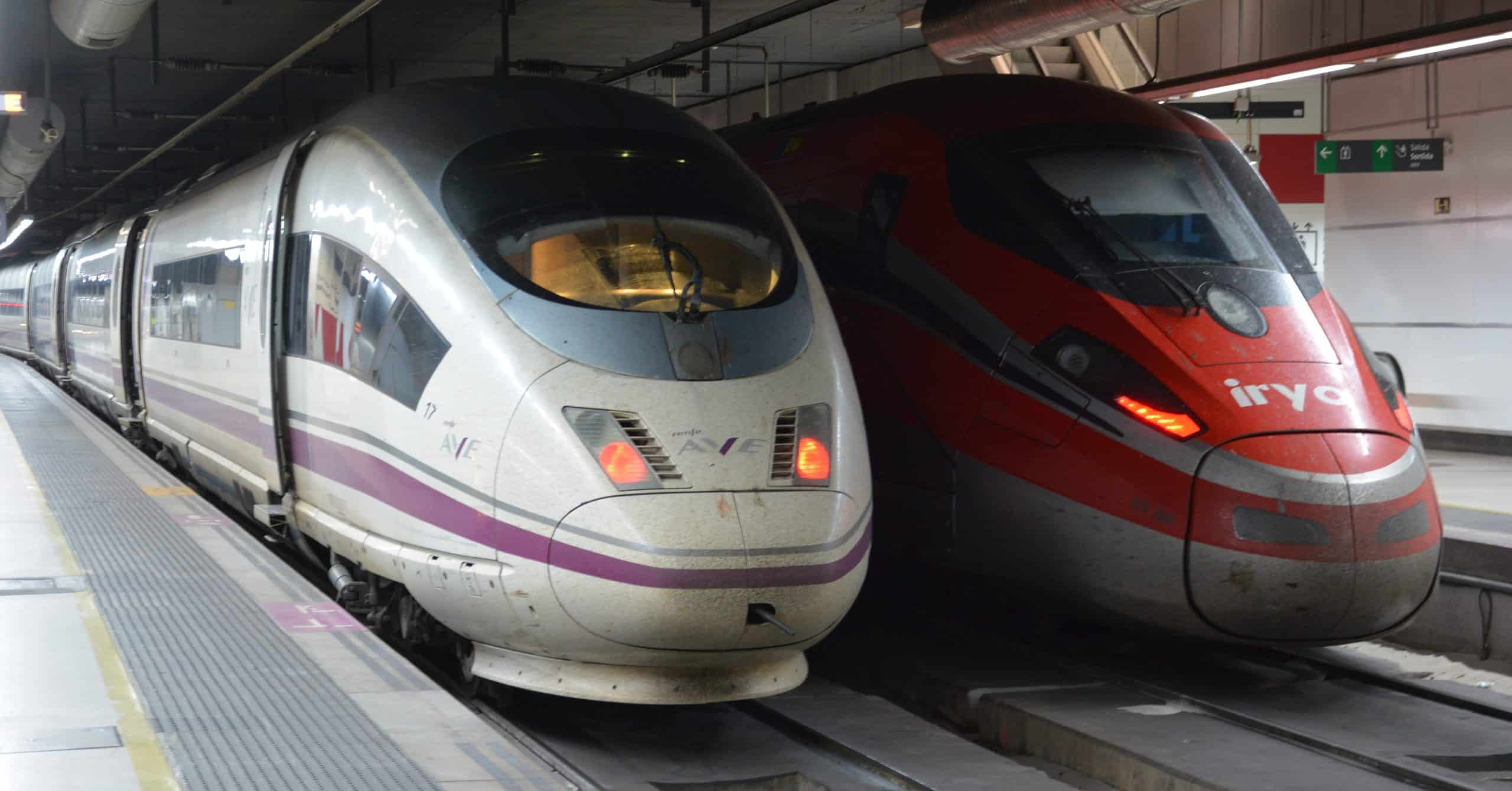
- The problem: several trains came to a stand within the same physical block section because LZB permits this. The first was the Iryo train and the second, the accident-involved AVE. Within the block section, the AVE driver had no signal warning of a train ahead, and ASFA only acts when passing a signal.
- The Traffic Regulation and Control Centre authorised running under normal rules, up to the 200 km/h permitted by ASFA.
- The Iryo did not resume because it was slow to reset its system. It remained stationary at the entry signal to Urda PAET (station), on the point of entering the next block section.
- Neither the AVE nor the following trains were ordered to proceed at caution (running at a low speed that permits stopping). The driver also failed to recognise that this was the correct course and relied on the order received. By the time he sighted the stationary Iryo, he could no longer stop, even with the emergency brake.
- Reference is made to a distant signal, which indicates the aspect of the signal governing entry to the next block section. Since that signal was at green, so was the distant signal. The driver and ASFA therefore interpreted that it was safe to proceed.
With this, it may seem easy to blame a single individual — the person who gave the wrong order. But this is far more complex, and that conclusion is wrong.
The inexplicable
Puente described the order to proceed under normal rules rather than at caution as inexplicable. It sounds like an attempt to place all responsibility on the Traffic Controller, while asking us to draw conclusions without knowing the full picture set out below.
As an independent outlet, it is not for us to apportion blame for political convenience, whatever its colour. Our role is to defend the railway and to tell the whole story.
It is indisputable that this person made a mistake and that their order was the trigger. Just as indisputable is Francisco José Garzón’s lapse of attention, which in the Angrois accident (2013) saw him enter the A Grandeira curve — limited to 80 km/h — at 191 km/h with a Class 730 train on an Alvia service.
What is inexplicable in both cases, in my view, is that the outcome was partly foreseeable and was not sufficiently prevented.
We can debate the reliability of LZB, ERTMS, ASFA, Convel, CBTC… All are computer-based systems and can fail however well maintained they are — and here even that does not appear to be the case. When a critical system fails, there must be a human system capable of taking control, with protocols that preserve a minimum level of operability.
And I mean a human system, not a single operator: above that person there are others who must ensure they are fit to assume that responsibility. I am not talking about the Traffic Controller’s incompetence, but about other factors that pushed them into error.
While safety systems fail, the human system must be infallible. Especially when there is more than one train in a physical block section.
A staffing shortage that was reported
What is truly inexplicable is not so much the wrong order as the fact that traffic controllers have spent years reporting understaffing and excessive workload, and their consequent inability to perform their duties properly.
They have demanded this through strikes since December 2018, with little impact because of excessive minimum service levels, which have reached 100% (another inexplicable matter). Even then, they denounced the insufficient replacement rate — key to recruitment — and the lack of infrastructure maintenance. Pedro Sánchez had been in Moncloa for barely six months and had inherited a hot potato that has continued to grow.
The problem goes back further. In September 2017, CCOO called a strike at Renfe and Adif and denounced the loss of nearly 6,000 jobs since 2005: from 32,000 employees to 26,000. It called for them to be restored to maintain the quality of the railway.
The unions trace the deficit to the 2008 crisis, when recruitment was halted. Mass hiring did not arrive until 2016, with a replacement rate that ignored retirements left unfilled by the cuts.
A time bomb
In December 2018, the average age of traffic controllers was 56. Veterans were retiring and younger staff were taking up positions of responsibility prematurely, without accumulating the necessary experience.
Proceeding under normal rules was a mistake, and the failure of those involved to detect it was another serious one. But they can be understood as errors typical of stress and being overwhelmed.
What is truly inexplicable is keeping safety-critical staff working excessive hours and handling more trains than they should, without replacing retirees, with more traffic and computer systems that fail more often because of their age and slow renewal. The replacement rate depends on the State Budget, and therefore on the Ministry of Finance of the same government.
Just as it was foreseeable that a driver would miss the A Grandeira curve at Angrois because someone decided to switch off ERTMS, having scarce and inexperienced traffic-control staff was a time bomb. And it has exploded.
We cannot allow this accident, once again, to be blamed on a single person; on the weakest link in the chain. On someone who, like the Alvia driver, will never be able to shake off such a crushing burden.
Defending the railway does not mean staying silent about its failures; it means demanding that it be as safe as those of us who use it and work in it deserve. That means more staff, better maintenance and protocols that do not depend on anyone being infallible. From Railin we will follow the investigation and report what is uncovered, uncomfortable or not.
All political parties — including breakaway factions — should reflect on the mistakes made, acknowledge them and commit to solving them.