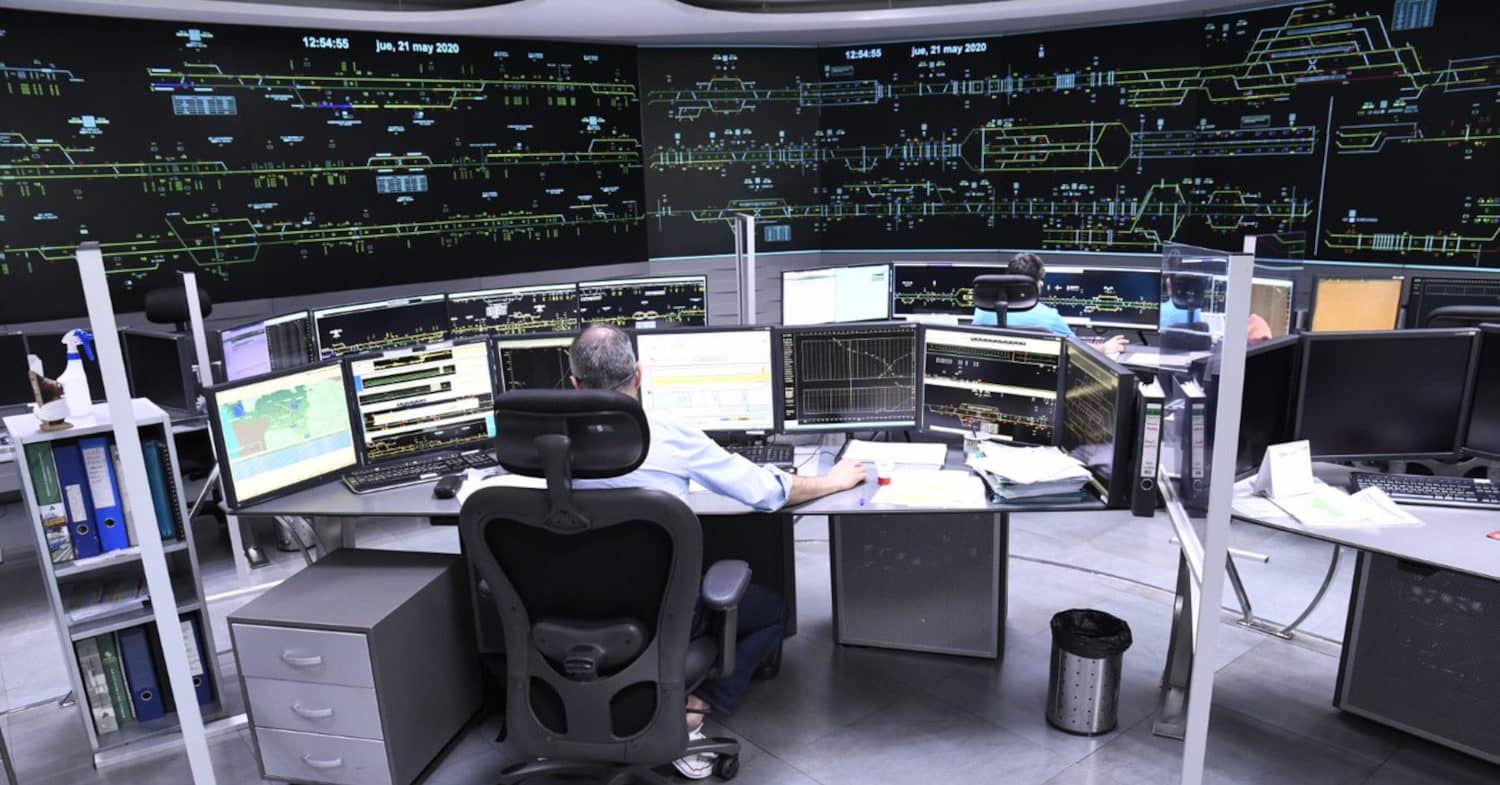
The Railway Traffic Union (SCF) has called two 24-hour strikes at Adif, on 17 and 19 November. On the first day of the strike, the SCF is joining forces with other trade unions; this action follows the conclusion of the Dispute Committee’s proceedings, during which no agreement was reached with the company.
This is not the first time that traffic-control staff representatives have called a strike over similar demands. However, such stoppages have largely gone unnoticed because minimum-service levels have at times been set at 100%.

The union argues that the traffic control centres (CRCs) are understaffed, as it has been warning for almost a decade. It is calling for additional staff in Type A and B posts to guarantee rest periods, cover sickness and leave, and improve work-life balance. It also demands continuous training and simulator practice to handle degraded-mode operations.
It also calls for a review of technical instruction IT-402-001-023-SC-031 to set maximum traffic-regulation times and prevent fatigue from affecting safety. It wants temporary speed restrictions (TSRs) to be notified daily to all affected services, rather than weekly as is the case on certain routes.
For track works and signalling installations, it asks for a review of the instructions governing how many worksites a single signaller-in-charge may handle. It proposes extending the application used in the East and Centre zones to all sub-directorates and control-centre bands, or alternatively rolling out the new Odin tool. It also seeks changes to the incompatibility instructions to allow simultaneous routes at certain stations.
Other demands include bringing forward the introduction of ERTMS on the Madrid–Sevilla high-speed line (LAV), where the LZB system suffers from reliability and obsolescence problems, and granting newly certified staff an additional month of supervised work.
The strike on the 17th coincides with the strike called by CCOO, Alferro and Semaf at Adif and Renfe, which has today been extended to Ouigo, Iryo and some private freight operators. These industrial actions follow the accidents at Adamuz and Urda.