On Tuesday, Spain’s Council of Ministers has approved, on the proposal of the Ministry of Transport and Sustainable Mobility, a Royal Decree-Law containing urgent measures to strengthen operational safety in rail transport and extend social protection for rail sector professionals. The legislation addresses four areas: the calculation of train drivers’ driving time, the supervisory powers of the Spanish Railway Safety Agency (AESF), just culture and the early-retirement reduction coefficients.
The initiative responds to long-standing demands from trade unions and seeks to harmonise the application of rights and obligations among railway undertakings operating on interoperable lines or on the General Interest Railway Network (RFIG).

Train drivers’ driving time
The Royal Decree-Law clarifies which activities count as driving time. From now on, it will include shunting movements involving the operation of a moving rail vehicle, as well as interruptions during which the driver remains responsible for the vehicle and must monitor train movements or shunting operations.
Any period of less than 45 minutes between the end and resumption of a driving activity by the same driver will also be counted in full. This rule applies even if the employee has been relieved of responsibility for the vehicle, is not required to monitor train movements, performs no activity, or is assigned to other duties.
The legislation also includes interruptions of 45 minutes or more that occur during tests, trials, track-recording runs or inspections. In addition, it extends the calculation to driving periods performed outside the RFIG, for example by staff holding a driving licence and qualifications as a shunting vehicle operator or infrastructure machinery operator.
In the exceptional cases where driving is performed by pairs of drivers — one qualified for the vehicle and the other for the infrastructure — driving time will be calculated simultaneously and under the same conditions for both.
Signallers keep uninterrupted shifts
The Royal Decree excludes any improvement to signallers’ working hours. Although the Urda accident resulted from an incorrect instruction, and although the group has demanded improvements for many years, the Ministry of Transport has chosen to retain continuous eight-hour shifts.
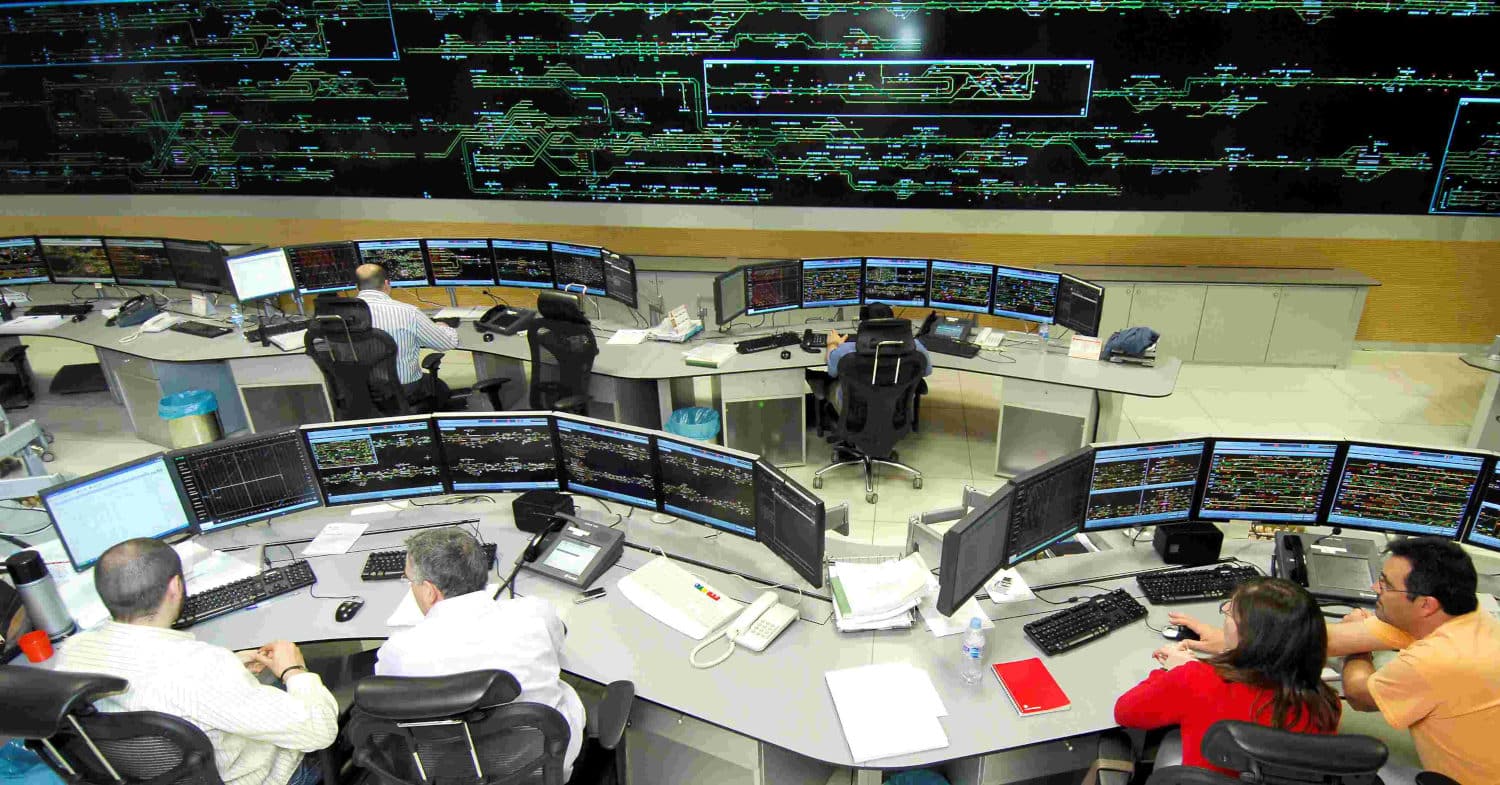
This work requires a high level of concentration. Fatigue and stress peaks caused by workload and unforeseen events, such as a degraded operating situation, are sources of error that can lead to accidents. As this publication reports, it is inexplicable that no measures have been adopted to improve the working conditions of this group, on which the safety of train operations directly depends.
Greater powers for the AESF
The text strengthens the supervisory and inspection powers of the AESF (Spanish Railway Safety Agency). Any natural or legal person subject to a supervisory action must grant inspection staff access to their facilities and equipment, while railway entities must allow access to premises, rolling stock and equipment where necessary for inspection.
The measure allows the Agency to carry out its activities even where the facilities, trains or equipment subject to supervision belong to an entity other than the one directly being supervised. The aim is to prevent practical limitations on inspections and to strengthen oversight of operational safety across the entire railway chain.
Just culture and the right to stop a train
The Royal Decree-Law incorporates the principles of just culture into Law 38/2015 of 29 September on the Railway Sector through a specific chapter on reporting risks to operational safety and protecting staff.
Personnel with operational safety functions can report risks through internal channels or public reporting systems that guarantee the confidentiality of the person making the report. No sanctions will be imposed where the information is reported in advance, the infringing conduct ceases, and there is full cooperation with the investigation.
The legislation also recognises workers’ right to take necessary and proportionate measures in the face of a serious and imminent risk to safety. These include stopping a train or deciding not to start it, always subject to the obligation to notify the relevant parties without delay.
The text establishes protection against workplace retaliation or sanctions for those who report risks or act to preserve safety. This safeguard will not apply in cases of wilful misconduct, bad faith or gross negligence.
Early-retirement reduction coefficients
On social protection, the decree extends the social security regime provided for in Article 3 of Royal Decree 2621/1986 of 24 December to staff of railway undertakings operating on interoperable lines or on the RFIG. The aim is to ensure equal treatment in early-retirement reduction coefficients among professionals performing the same functions.
The Government will also introduce a procedure to review these coefficients, in accordance with Royal Decree 402/2025 of 27 May, with trade union participation. The review will examine the inclusion of other railway occupational categories exposed to arduous, toxic, hazardous or unhealthy work.
The approval of the Royal Decree-Law comes amid labour tensions in the sector, with strikes called for today and Thursday, 12 November, as well as on 17 and 19 November, in response to the Urda accident. The Ministry of Transport argues that the Royal Decree represents a significant regulatory change for railway safety, the management of driving time and the social protection of the professionals who operate the network.